On this page
Chronic licking that leaves front paws damp, rust-stained, or raw rarely stays a skin problem for long. Food reactions shift the gut immune tone, that tone shifts the skin barrier, and the paws take the punishment.
For owners sorting it out, start here:
- Track pattern over cause: daily, year-round licking points more toward food than seasonal pollen.
- Read the gut signs alongside the paws: loose stool, gas, or ear flare-ups raise suspicion for a gut-skin link.
- Fix the diet trial before adding supplements: a strict 6- to 8-week elimination tells you more than rotating probiotics.
- Support structure, not cure disease: fiber, prebiotics, and defined probiotic strains may help support normal immune balance and stool quality.
- Know when paws come first: wounds, swelling, single-paw licking, or limping need a hands-on exam, not a diet change.
That checklist decides the next step. What follows is how each piece connects, and where the mechanism stops.
When licking points below the skin
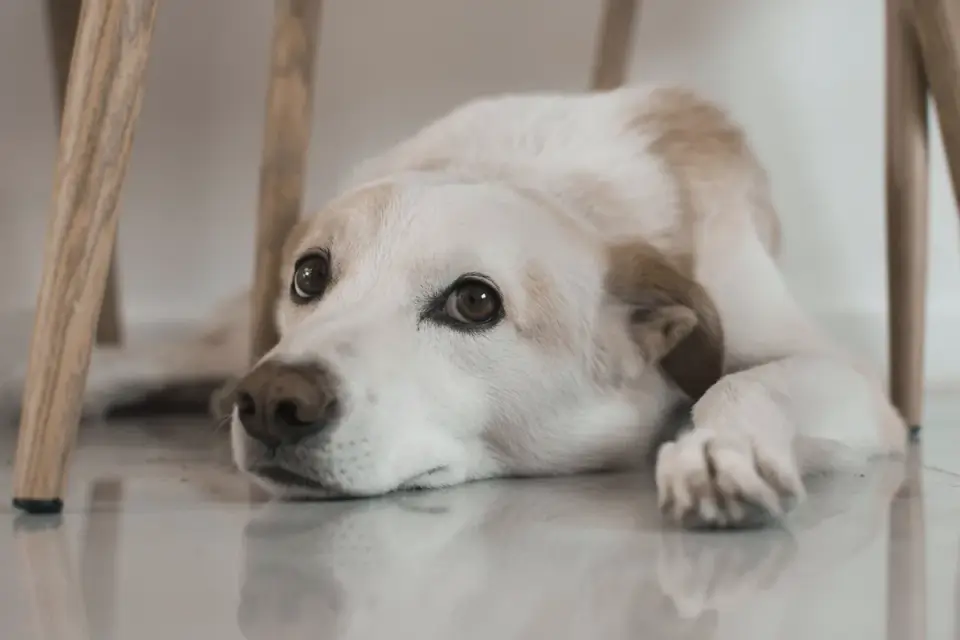
In practice, vets often see the same overlap: itchy paws plus soft stool, gassy evenings, or recurrent ear redness. Raymond in Murrieta, for example, logged his 4-year-old spayed Poodle Anabelle licking both front paws nightly for 3 weeks, with cow-patty stools twice that week despite no change in walks or bedding.
That combination matters. Allergy guidance from VCA Hospitals notes that food allergy in dogs often shows as nonseasonal itch of paws, face, and ears, sometimes with gastrointestinal signs. Pollen allergy tends to spike by season. Year-round paw chewing with gut noise leans the other way.
The mechanism is plain: most of the immune system surveys the gut lining. When diet proteins or dysbiosis keep that lining reactive, circulating immune signals stay high and the skin barrier leaks water more easily. Paw skin is thin, warm between the toes, and constantly licked, so it breaks first.
The limit is function-based. A calmer gut may help support more comfortable skin and fewer licking bouts, but it will not reshape joint pain, fix a foxtail lodged between toes, or erase a true environmental allergy.
Food reactions versus gut imbalance
These two get lumped together, and they behave differently.
Food reaction means a repeatable immune response to a diet component, usually a protein. Response means diet change is the lever. A strict elimination trial with one novel or hydrolyzed protein, no flavored chews or table scraps, for a full 6 to 8 weeks is still the standard way to test it. Improvement followed by flare on rechallenge answers the question.
Gut imbalance means a shift in microbial balance and stool quality without a single protein trigger. Here fiber and feeding consistency do more work than avoidance. That is where structure/function support fits: pumpkin fiber as a gentle mix of soluble and insoluble fiber, prebiotic fibers that feed resident microbes, and probiotics selected by strain for stool and immune support.
The National Institutes of Health Office of Dietary Supplements explains that probiotics act in strain-specific ways and that a balanced gut microbiome supports overall immune function, which is why strain identity and viability matter more than total CFU hype.
The plain reading: if licking fades during a clean trial and returns when the old diet returns, food was driving it. If stool firms and licking eases with steady fiber and a defined strain but any complete diet is tolerated, balance was the issue.
That distinction keeps owners from buying three supplements when one diet change would have answered it.
What to change, in order
Acupuncture, Tui-na, and food therapy share one rule: restore normal movement and input first, then judge what remains. The gut version looks like this.
Start with diet discipline. Pick one complete diet, weigh meals, and keep a one-page log of licking minutes per evening, stool score, and ear scratching. Owners who guess usually misread slow change. A short daily note over 8 weeks beats memory.
Add fiber with intention. Mixed soluble and insoluble fiber supports normal transit and gives microbes fermentable substrate. Too much too fast loosens stool, so titrate over 5 to 7 days. For more on that ceiling, see Can You Give a Dog Too Much Fiber? What the Research Actually Shows and the broader framework in The Complete Guide to Dog Gut Health and Digestion.
Consider probiotics by strain, not by promise. Look for genus, species, and strain designation on the label, guaranteed CFU through end of shelf life, and storage directions. Give it with a consistent diet for at least 4 weeks before judging paw time. If antibiotics enter the picture during the trial, timing and strain choice matter, as reviewed in Can You Give Dogs Probiotics With Antibiotics? What the Research Actually Shows.
Protect the paws while the gut settles. Rinse paws after wet grass, dry fully between toes, and use an Elizabethan collar short-term to break a lick-itch cycle that keeps skin wet.
Where diet stops winning
Diet support has a clear edge, then a clear stop.
It stops winning when licking is one-sided, sudden, or painful. A single swollen paw, limping, bleeding, or a hot spot that spreads in hours points to injury, foreign body, yeast or bacterial flare, or orthopedic pain referred as licking. Manual-medicine work may help support mobility and comfort in stiff older dogs that lick wrists at rest, but it cannot replace extraction of an embedded awn or treatment of an infected nail bed.
It also stops when strict diet work changes nothing. Eight clean weeks with no shift in licking time or stool quality argues against food as the driver. That is useful information. Pivot to environmental allergy testing, skin scrapings, and pain assessment rather than adding another powder.
Short single-sentence check: If the gut log is flat and the paws are still wet, change the workup, not the topper.
For diet transitions that upset the stomach along the way, a slower step-down plan helps keep the trial interpretable, as outlined in Dog Stomach Upset When Switching to Raw Food: What the Gut Is Telling You.
The bottom line stays narrow. Treat the paws to keep skin intact, test food with discipline to find the source, and use microbiome support to maintain normal function. Licking that persists past that sequence has told you its answer: look beyond the bowl.
Frequently asked questions
How long before a diet change should paw licking improve?
Allow a strict 6 to 8 weeks on one elimination diet with no extra flavored treats or chews, tracking nightly licking minutes and stool quality. Partial improvement by weeks 4 to 6 is common when food is involved; no change after 8 clean weeks points away from food.
Can probiotics alone stop paw licking?
Probiotics may help support normal stool quality and immune balance by strain, but they do not replace an elimination trial or treat infection, injury, or environmental allergy. Use a labeled strain for at least 4 weeks with a steady diet, then judge licking time.
What signs suggest the gut is involved, not just the skin?
Year-round licking of both front paws plus gas, variable stool, ear redness, or face rubbing raises suspicion for a food or gut link. Single-paw swelling, limping, odor with discharge, or sudden hot spots point to a local paw problem needing an exam.
Sources
- Probiotics — National Institutes of Health Office of Dietary Supplements
- Allergy – General in Dogs — VCA Hospitals