
On this page
You open the bag and it smells like jerky, not toast. That is air-dried dog food doing exactly what it promises.
The pieces are dense, chewy, a little leathery. Most dogs notice right away, and for picky eaters that aroma can matter more than any nutrition panel. You are paying for that response, though, so it helps to know what slow, warm-air drying can realistically do for diet, mobility, and recovery — and what it cannot.
Think of air-drying as dehydration with patience. Thin layers of mixed ingredients sit in warm moving air, usually well below extrusion temperatures, until most of the moisture is gone. You end up with food around 12-20% moisture, compared with about 8-10% for kibble and 60-80% for wet food.
Because the heat is gentler than extrusion, fats and flavor compounds hold up better. Protein is still cooked enough for safety in most commercial recipes, but the texture stays closer to meat than to a baked biscuit. That is the gain people taste and smell.
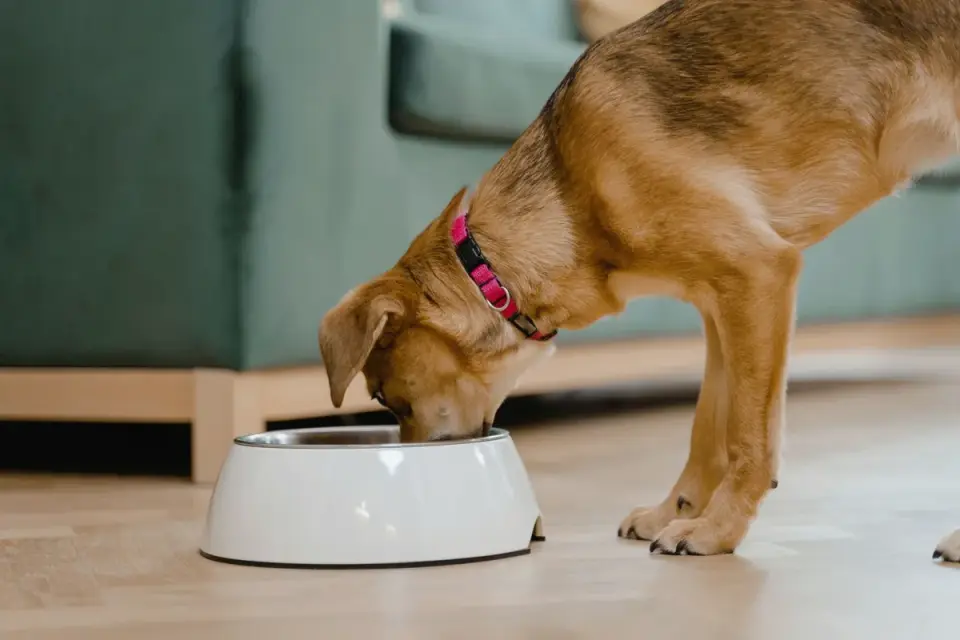
Where air-dried sits on the shelf
Kibble is shaped under high heat and pressure, which makes it cheap to make, easy to store, and very calorie-dense per cup. Freeze-dried food skips heat and pulls water out by sublimation, which preserves structure well but costs even more and often needs careful handling.
Air-dried lands in the middle. It is shelf-stable like kibble, no freezer needed, and you can feed it straight from the bag. It is heavier and denser than kibble, so the feeding amount often looks small even when the calories are right.
Check that against What the First Five Ingredients Really Tell You before you fall for the smell test. Meat first still matters, but so does the complete-and-balanced statement.
What the gut actually notices
From a microbiome view, the format matters less than the formula. Dogs ferment fiber and resistant starch in the colon, and that process depends on the fibers and carbohydrates in the recipe, not whether the piece was air-dried or extruded.
A balanced gut microbiome supports overall immune function, and steady fiber helps keep stool formed. Pumpkin fiber is a gentle, natural source of both soluble and insoluble fiber, which is why you will see it across formats. Air-drying does not automatically add those fibers.
There is one practical gut point. Because air-dried pieces are concentrated, a sudden switch can loosen stool. Vets often see that when an owner pours the same volume as kibble. Go slower and measure by grams or calories, using ideas from How Much New Food to Mix In When Switching Dog Food.
In Plano, Shannon weighed this with Venus, her 9-year-old spayed American Staffordshire Terrier. Venus was leaving kibble in the bowl but ate chewy treats well, so Shannon trialed air-dried as a quarter of the bowl for 10 days. Intake improved without changing the base diet, which kept the cost and the calorie math manageable.
Reading the label without overpaying for words
The U.S. Food and Drug Administration oversees pet food labeling for truthfulness, including ingredient names and nutritional claims, so start with the back panel rather than the front.
Look for an AAFCO complete-and-balanced statement for your dog’s life stage. Then look at calories, fat, and fiber on a dry-matter basis if you are comparing to kibble. Air-dried often runs higher in fat and calories per ounce because water is gone but fat remains.
“Human-grade,” “gently cooked,” and “minimally processed” sound reassuring, but they do not guarantee better digestibility. The Association of American Feed Control Officials explains how ingredient definitions and feeding statements work, which helps you separate marketing from method.
If you home-cook or mix formats, Do You Need Supplements for Homemade Dog Food? is a useful companion. A supplement can help fill a known gap in calcium, choline, or omega-3s, yet it cannot fix an unbalanced base recipe or add back calories you did not feed.
You do not need to fear this format.
Used well, it is a palatable, shelf-stable way to feed a complete diet.
So is the bag worth it?
Here is where I land. Buy air-dried when palatability or convenience solves a real problem: a small dog that wastes kibble, travel without refrigeration, or a topper that gets a senior to finish dinner.
Do not buy it expecting stronger joints, faster recovery, or a healthier microbiome from drying alone. Food therapy starts with meeting nutrient needs consistently, and supplement science only goes so far beyond that. An air-dried diet may help support daily intake and condition when the dog eats it reliably — that consistency is the benefit.
My evidence-bounded recommendation? If budget is tight, spend on a well-formulated base diet first and use air-dried as 10-25% of calories. You get most of the aroma and chew for a fraction of the price. If budget is flexible and your dog does best on it as a full diet, that is a reasonable considered choice, not a default every dog needs.
Still wondering if your picky eater just needs a new texture, or if something else is going on with appetite and stool?
Frequently asked questions
Is air-dried dog food raw?
No. Most commercial air-dried diets use heat during drying and are formulated to be fed as-is without rehydration. Check the label for handling instructions and the complete-and-balanced statement.
Can I mix air-dried food with kibble?
Yes, many owners use it as a topper. Measure total daily calories across both foods and transition over 7-10 days to avoid loose stool.
Sources
- FDA's Regulation of Pet Food — U.S. Food and Drug Administration
- Understanding Pet Food — Association of American Feed Control Officials